The Early Apostles
AD 30–49 · Acts 1–15, James, Matthew
Narration in Mandarin Chinese · English version in production
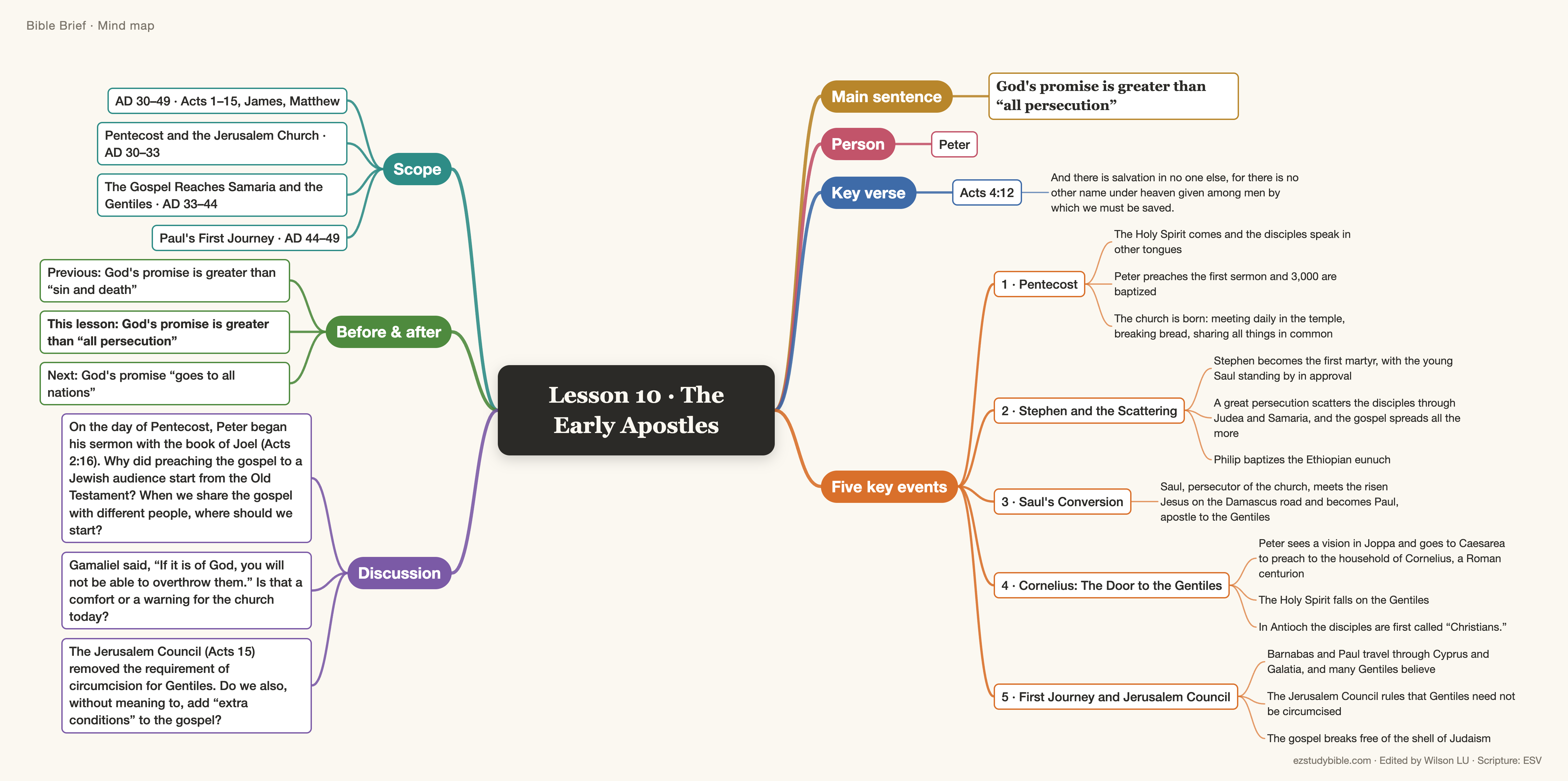
God's promise is greater than all persecution
- Person
- Peter
- Key verse
- And there is salvation in no one else, for there is no other name under heaven given among men by which we must be saved.Acts 4:12
- Pentecost
The Holy Spirit comes and the disciples speak in other tongues. Peter preaches the first sermon and 3,000 are baptized. The church is born: meeting daily in the temple, breaking bread, sharing all things in common.Acts 1-2
- Stephen and the Scattering
Stephen becomes the first martyr, with the young Saul standing by in approval. A great persecution scatters the disciples through Judea and Samaria, and the gospel spreads all the more. Philip baptizes the Ethiopian eunuch.Acts 6-8
- Cornelius: The Door to the Gentiles
Peter sees a vision in Joppa and goes to Caesarea to preach to the household of Cornelius, a Roman centurion; the Holy Spirit falls on the Gentiles. In Antioch the disciples are first called “Christians.”Acts 10-11
- First Journey and Jerusalem Council
Barnabas and Paul travel through Cyprus and Galatia, and many Gentiles believe. The Jerusalem Council rules that Gentiles need not be circumcised. The gospel breaks free of the shell of Judaism.Acts 13-15Jas
- Lesson 10: God's promise is greater than all persecution
- This lesson's person is Peter
- Peter said: there is salvation in no one else
Think first, then tap a blank to see the answer.
Group discussion
- On the day of Pentecost, Peter began his sermon with the book of Joel (Acts 2:16). Why did preaching the gospel to a Jewish audience start from the Old Testament? When we share the gospel with different people, where should we start?
- Gamaliel said, “If it is of God, you will not be able to overthrow them.” Is that a comfort or a warning for the church today?
- The Jerusalem Council (Acts 15) removed the requirement of circumcision for Gentiles. Do we also, without meaning to, add “extra conditions” to the gospel?
Reference notes for the discussion questions (church leaders)
…
Look up all points and notes 16 points
Pentecost and the Jerusalem Church
- 265
Ten days after the ascension, on the day of Pentecost, the Holy Spirit came upon the 120 disciples and they spoke in other tongues. Jews who had come for the feast from all over the Roman Empire each heard their own language. Peter preached: “God has made him both Lord and Christ, this Jesus whom you crucified.” About 3,000 were baptized that day. Day by day they met together in the temple, broke bread, and had all things in common.Acts 1-2Joel 2
- 266
Peter and John healed a man lame from birth at the Beautiful Gate of the temple. The council forbade them to speak in the name of Jesus. Peter answered: “There is salvation in no one else, for there is no other name under heaven given among men by which we must be saved.”Acts 3-4
- 267
Believers sold their land and shared everything. Ananias and Sapphira lied to the Holy Spirit and fell down dead. People carried the sick into the streets, hoping Peter's shadow might fall on them.Acts 4-5
- 268
The high priest put the apostles in prison; at night an angel opened the doors and let them out. Gamaliel warned the council: “If it is of God, you will not be able to overthrow them. You might even be found opposing God!” The apostles were beaten, rejoiced, and went on preaching in the temple every day.Acts 5
- 269
The church chose seven men to oversee the daily distribution of food. Stephen did signs and debated Jews from Cilicia and elsewhere. Falsely accused, he recounted Israel's history before the council: “You always resist the Holy Spirit.” He was stoned to death, seeing the Son of Man standing at God's right hand. The young man Saul watched the coats and approved of his death.Acts 6-7Acts 22
The Gospel Reaches Samaria and the Gentiles
- 270
After Stephen's death a great persecution broke out against the Jerusalem church, and the disciples were scattered through Judea and Samaria, preaching as they went. Philip preached the gospel in Samaria; Peter and John came and laid hands on the believers, and they received the Holy Spirit. On a desert road Philip explained Isaiah 53 to an Ethiopian eunuch and baptized him.Acts 8
- 271
Saul set out for Damascus to arrest the disciples. On the road Jesus appeared to him: “Saul, Saul, why are you persecuting me?” He was blind for three days, until Ananias laid hands on him. Jesus chose him “to carry my name before the Gentiles and kings and the children of Israel.”Acts 9Acts 22Acts 26Gal 1
- 272
Three years later Saul went up to Jerusalem, and Barnabas brought him to the apostles. While he was praying in the temple, the Lord told him, “Make haste and get out of Jerusalem quickly,” and the brothers sent him home to Tarsus. In Joppa Peter saw a vision and went to Caesarea to preach to the household of Cornelius, a Roman centurion. The Holy Spirit fell on the Gentiles, and Peter baptized them.Acts 9-11Acts 22Gal 1
- 273
At first the believers in Jerusalem criticized Peter for entering a Gentile home. Disciples from Cyprus and Cyrene preached to Greeks in Antioch, and many believed. Barnabas went to Tarsus to find Saul, and together they taught there; “in Antioch the disciples were first called Christians.” It was around this time that Paul was caught up to the third heaven and heard things that cannot be told.Acts 112 Cor 12
- 274
MatthewWritten for Jewish readers, it stresses fulfilled prophecy (“to fulfill what was spoken by the prophet” appears more than ten times). It opens with the genealogy from Abraham, then records Jesus' birth in Bethlehem and move to Nazareth, John the Baptist's witness, the Sermon on the Mount, healings and exorcisms, the twelve apostles, the parables of the kingdom, the transfiguration, the Olivet discourse, the trial, death, burial, and resurrection, and finally the Great Commission.Matt 1-28
The original Brief dates Matthew to the AD 40s. Early church tradition held that Matthew was the first Gospel written; most modern scholars place it in the AD 60s–80s.
Paul's First Journey
- 275
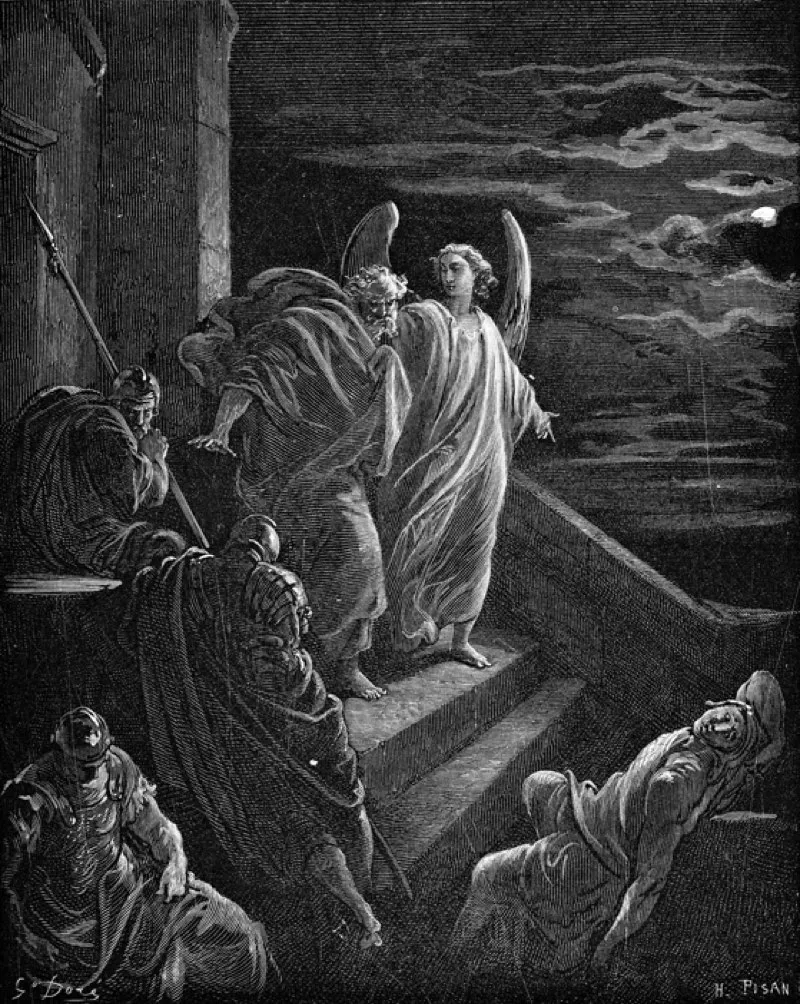
Herod Agrippa I killed James the brother of John and put Peter in prison. The church prayed earnestly, and an angel led Peter out. In Caesarea Herod accepted praise as a god and was eaten by worms and died. While the church in Antioch was fasting and praying, the Holy Spirit said, “Set apart for me Barnabas and Saul for the work to which I have called them.”Acts 12-13
- 276
Barnabas, Saul, and Mark sailed from Seleucia to Cyprus and went through the whole island from Salamis to Paphos. The proconsul Sergius Paulus believed; from this point Saul is called Paul. They sailed from Paphos to Perga in Pamphylia, where Mark left them and returned to Jerusalem.Acts 13
- 277
In Pisidian Antioch Paul preached in the synagogue, from the exodus to David to the death and resurrection of Jesus. On the next Sabbath the whole city came to listen. The Jews were jealous, and Paul said: “We are turning to the Gentiles.”Acts 13-14
- 278
In Iconium many believed, but Jews and Gentiles tried to stone them. In Lystra they healed a lame man and the crowd wanted to sacrifice to them as gods; later Jews stirred up the crowd to stone Paul, and they dragged him out of the city, thinking he was dead. He got up and went on to Derbe, then retraced his route to strengthen the disciples and appoint elders in every church. Back in Antioch they reported that God had opened a door of faith to the Gentiles.Acts 14Gal 4
- 279
JamesJames, the Lord's brother, writes to believers scattered among the twelve tribes: endure trials and ask for wisdom in faith. Show no partiality; treat rich and poor alike. Faith without works is dead. The tongue is a fire. Submit to God and resist the devil. “If the Lord wills, we will live.” The prayer of a righteous person has great power as it is working.Jas 1-5
- 280
Some men came from Judea teaching, “Unless you are circumcised according to the custom of Moses, you cannot be saved.” Paul, Barnabas, and Titus went up to Jerusalem, where the apostles and elders met. After Peter and James spoke, they decided: Gentile believers need not be circumcised, only abstain from food offered to idols, from blood, from what has been strangled, and from sexual immorality (AD 49).Acts 15Gal 2